
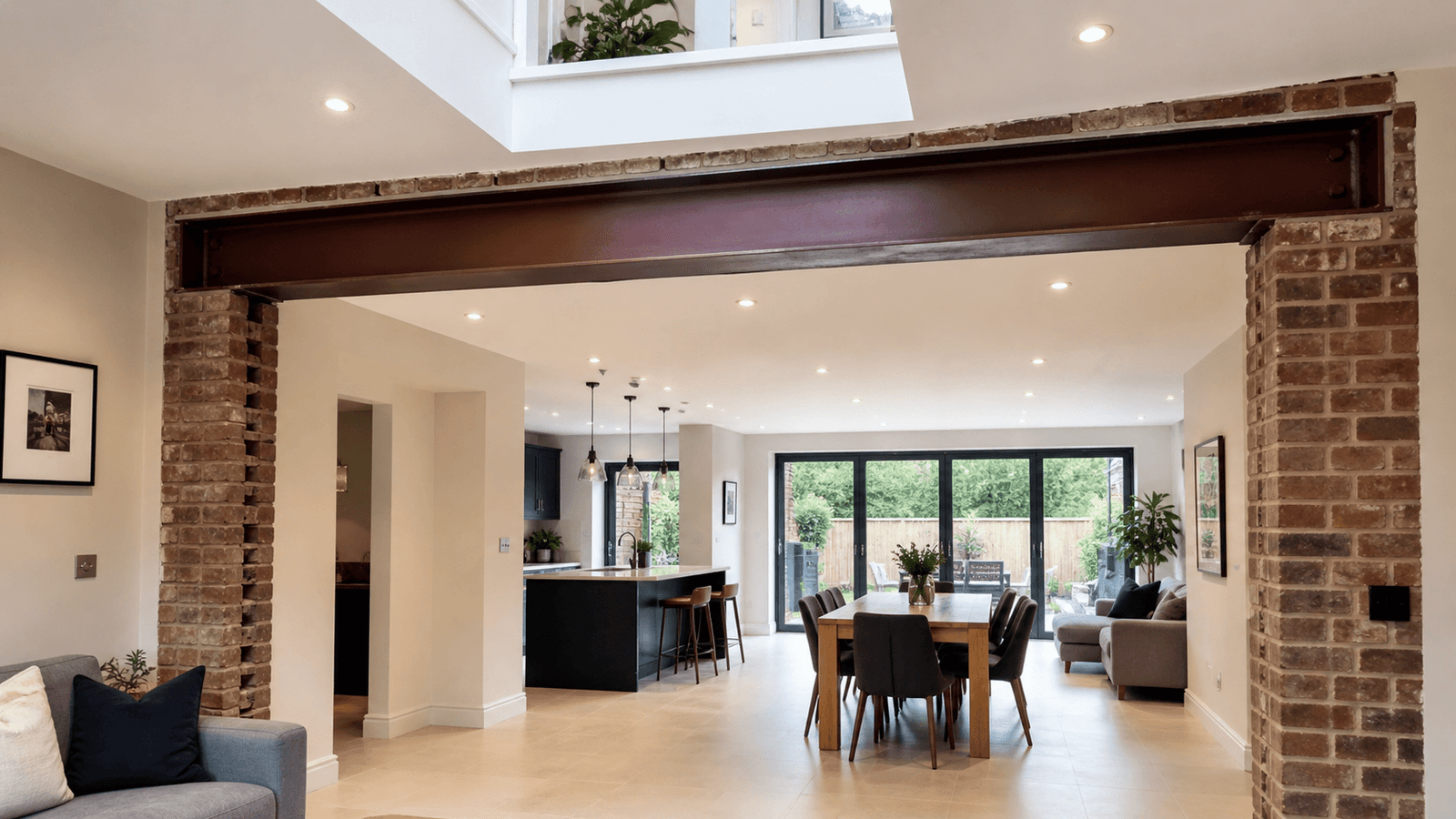
Removing a Load-Bearing Wall

Introduction
Removing a load-bearing wall is a common way to create open-plan living spaces.
However, load-bearing walls support structural loads from floors, roofs or walls above.
Removing them without providing proper structural support can compromise the stability of the building.
What Is a Load-Bearing Wall?
A load-bearing wall carries structural loads from the building above.
These loads are transferred down through the structure to the foundations.
When the wall is removed, the load must be supported by another structural element.
How Structural Support Is Added
In most cases, a steel beam is installed to support the loads previously carried by the wall.
This beam transfers the load to supporting walls or columns at each end.
Why Structural Calculations Are Required
Structural calculations determine:
- the correct beam size
- the load the beam must carry
- the support requirements
These calculations ensure the structural alteration is safe.
Building Regulations Approval
Removing a load-bearing wall usually requires Building Regulations approval because it is considered a structural alteration.
Building Control may require structural calculations to verify the design.
Typical Projects
- kitchen knock-throughs
- open-plan living areas
- extensions connecting to existing rooms
How BuildRegs Can Help
BuildRegs prepares structural calculations and Building Regulation drawings for structural alterations including load-bearing wall removals.
If you already have architect drawings, upload them and we will review the project and provide a quote.
Structural Calculations for Loft Conversions
Introduction
Loft conversions are one of the most popular ways to add additional living space to a home.
However, converting a loft into habitable space usually requires structural alterations to the existing building structure. Because of this, structural calculations are often required as part of the Building Regulations approval process.
Structural calculations demonstrate that the new structure can safely support the loads introduced by the conversion.
Why Structural Calculations Are Required for Loft Conversions
Most loft conversions involve structural modifications such as:
- installing new floor joists
- adding structural beams
- altering the roof structure
- redistributing loads within the building
These changes must be designed to ensure the building remains structurally safe.
Structural calculations provide the information required to determine appropriate beam sizes, support conditions and load paths.
Typical Structural Work in Loft Conversions
Many loft conversions require the installation of steel beams to support new floor structures.
These beams help distribute loads safely to the supporting walls of the property.
Other structural considerations may include:
- strengthening existing floor structures
- supporting dormer extensions
- modifying roof structures
Each project must be assessed based on the existing building structure and the proposed layout.
Building Regulations Approval
Converting a loft into habitable space generally requires approval under the Building Regulations.
The regulations ensure that the structure is safe and that the conversion meets requirements relating to structural stability, fire safety, insulation and other technical standards.
Structural calculations are commonly submitted as part of the Building Control approval process.
How BuildRegs Can Help
BuildRegs prepares structural calculations and Building Regulation drawings for loft conversion projects across the UK.
If you already have architect drawings for your loft conversion, you can upload them for review and receive a fixed quote for the required documentation.
Structural Calculations for Garage Conversions
Introduction
Garage conversions are a popular way to create additional living space within an existing property.
Many homeowners convert garages into home offices, bedrooms or additional living areas.
Although garage conversions may appear straightforward, they often involve structural alterations that require technical design and Building Regulations approval.
Structural Considerations in Garage Conversions
Garage conversions commonly involve structural modifications such as:
- replacing garage door openings with new walls or windows
- installing new lintels or beams
- modifying existing floor structures
These changes may require structural calculations to ensure that the building remains structurally sound.
Why Structural Calculations May Be Required
Structural calculations may be needed where structural elements are altered or replaced.
For example, if the existing garage door opening is replaced with masonry, a structural lintel or beam may be required to support the loads above the opening.
Structural calculations help determine the appropriate structural design for the project.
Building Regulations Approval
Garage conversions that create habitable rooms generally require approval under the Building Regulations.
This ensures the work meets standards relating to structural safety, insulation, ventilation and other technical requirements.
How BuildRegs Can Help
BuildRegs prepares structural calculations and Building Regulation drawings for garage conversion projects across the UK.
If you have architect drawings for your garage conversion, upload them and we will review the project and provide a fixed quote.
Building Regulation Drawings Explained
Introduction
When planning a home extension or structural alteration, homeowners often hear the term Building Regulation drawings.
These drawings are different from planning drawings and provide the technical information required for Building Control approval.
What Are Building Regulation Drawings?
Building Regulation drawings are technical drawings that show how a building project will be constructed in accordance with the Building Regulations.
They typically include detailed information about:
- construction methods
- structural elements
- materials
- insulation
- ventilation
- drainage
How They Differ from Planning Drawings
Planning drawings are primarily used to demonstrate the design and appearance of a project.
Building Regulation drawings go further by showing how the structure will be built and how it will comply with technical requirements.
When Building Regulation Drawings Are Required
- home extensions
- loft conversions
- garage conversions
- structural alterations
- new residential construction
How BuildRegs Can Help
BuildRegs prepares Building Regulation drawings and structural calculations for residential projects across the UK.
If you already have architect drawings for your project, upload them and we will review the requirements and provide a quote.
Structural Engineer vs Architect
Introduction
Many residential building projects involve both architectural design and structural design.
What Does an Architect Do?
- designing layouts
- planning drawings
- design concepts
What Does a Structural Engineer Do?
- steel beams
- structural openings
- load-bearing supports
How Architects and Structural Engineers Work Together
Architectural drawings are prepared first, followed by structural calculations.
Steel Beam Calculations Explained
Introduction
Steel beams are commonly used in residential construction to support structural loads.
When Steel Beams Are Used
- removing load-bearing walls
- open-plan spaces
- supporting floors or roofs
What Steel Beam Calculations Consider
- beam span
- loads
- supports
Why Calculations Are Important
Correct beam sizing ensures safety.
How Much Do Structural Calculations Cost?
Typical Structural Calculation Costs
Steel beam calculations start from £249.
Extensions start from £799 and loft conversions from £849.
What Affects the Cost
- project size
- complexity
- available drawings
Do I Always Need Structural Calculations?
- load-bearing walls
- steel beams
- loft conversions
Ready to Get a Quote?
Upload your plans and receive a fixed quote.