
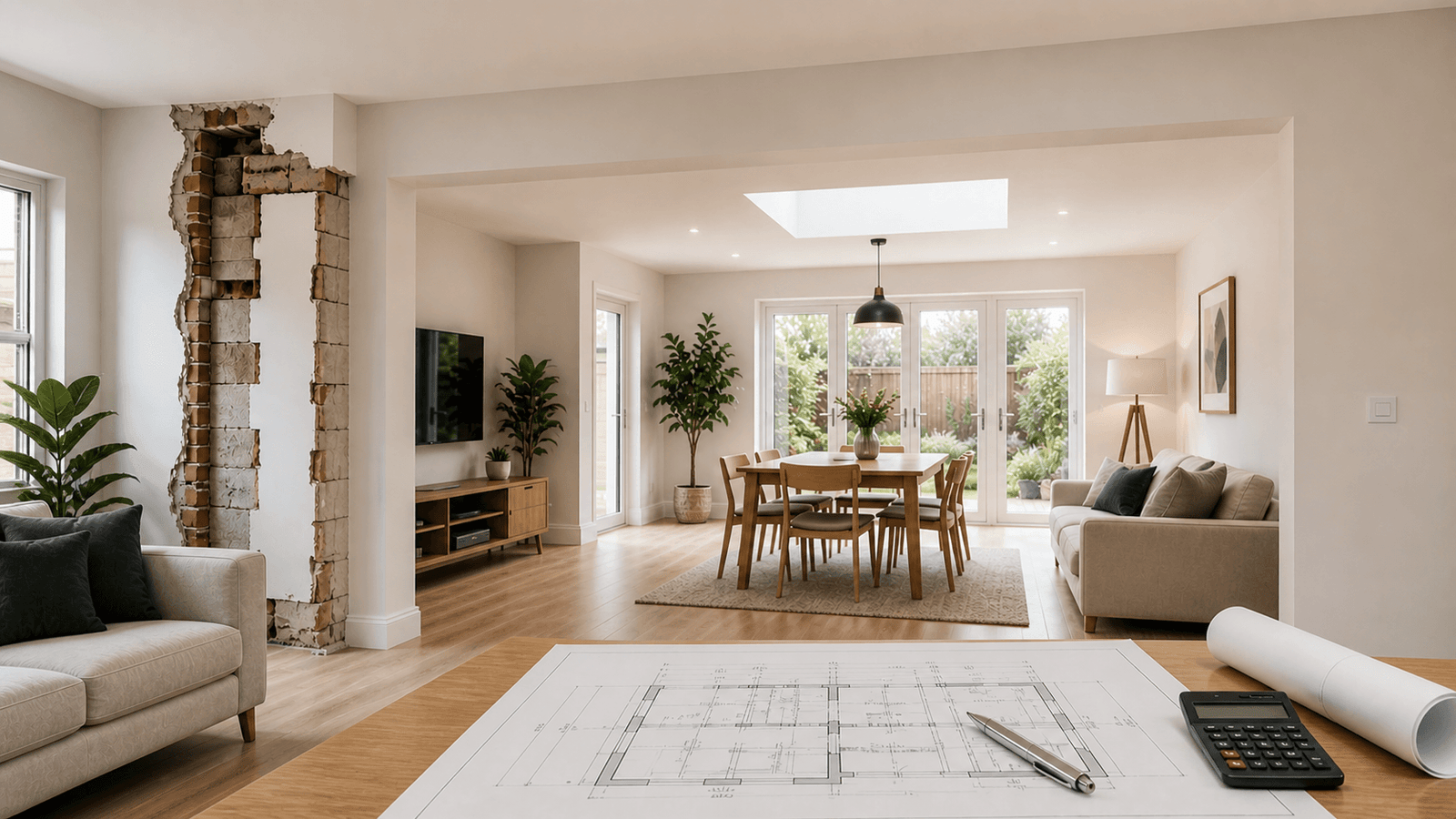
Building Regulation Drawings Explained

Introduction
When planning a home extension or structural alteration, homeowners often hear the term Building Regulation drawings.
These drawings are different from planning drawings and provide the technical information required for Building Control approval.
Understanding the difference between these types of drawings can help clarify the process involved in residential building projects.
What Are Building Regulation Drawings?
Building Regulation drawings are technical drawings that show how a building project will be constructed in accordance with the Building Regulations.
They typically include detailed information about:
- construction methods
- structural elements
- materials
- insulation
- ventilation
- drainage
These drawings help demonstrate that the proposed work complies with the relevant standards.
How They Differ from Planning Drawings
Planning drawings are primarily used to demonstrate the design and appearance of a project.
They usually include layout plans, elevations and site plans.
Building Regulation drawings go further by showing how the structure will be built and how it will comply with technical requirements.
When Building Regulation Drawings Are Required
Building Regulation drawings are typically required for:
- home extensions
- loft conversions
- garage conversions
- structural alterations
- new residential construction
They are usually submitted to Building Control as part of the approval process.
How BuildRegs Can Help
BuildRegs prepares Building Regulation drawings and structural calculations for residential projects across the UK.
If you already have architect drawings for your project, upload them and we will review the requirements and provide a quote.